DAY 1
Staff and employees
Assessing the situation, making decisions under pressure, leading a group and working with emergency services.

We help teaching staff, employees and students recognize threats, make informed decisions and protect themselves and others. We prepare them to respond to an aggressive or armed attacker and to drone-related threats.
We translate practical experience into clear principles adapted to participants' age, responsibilities and the school's procedures. We build knowledge, composure and readiness — without creating unnecessary fear.
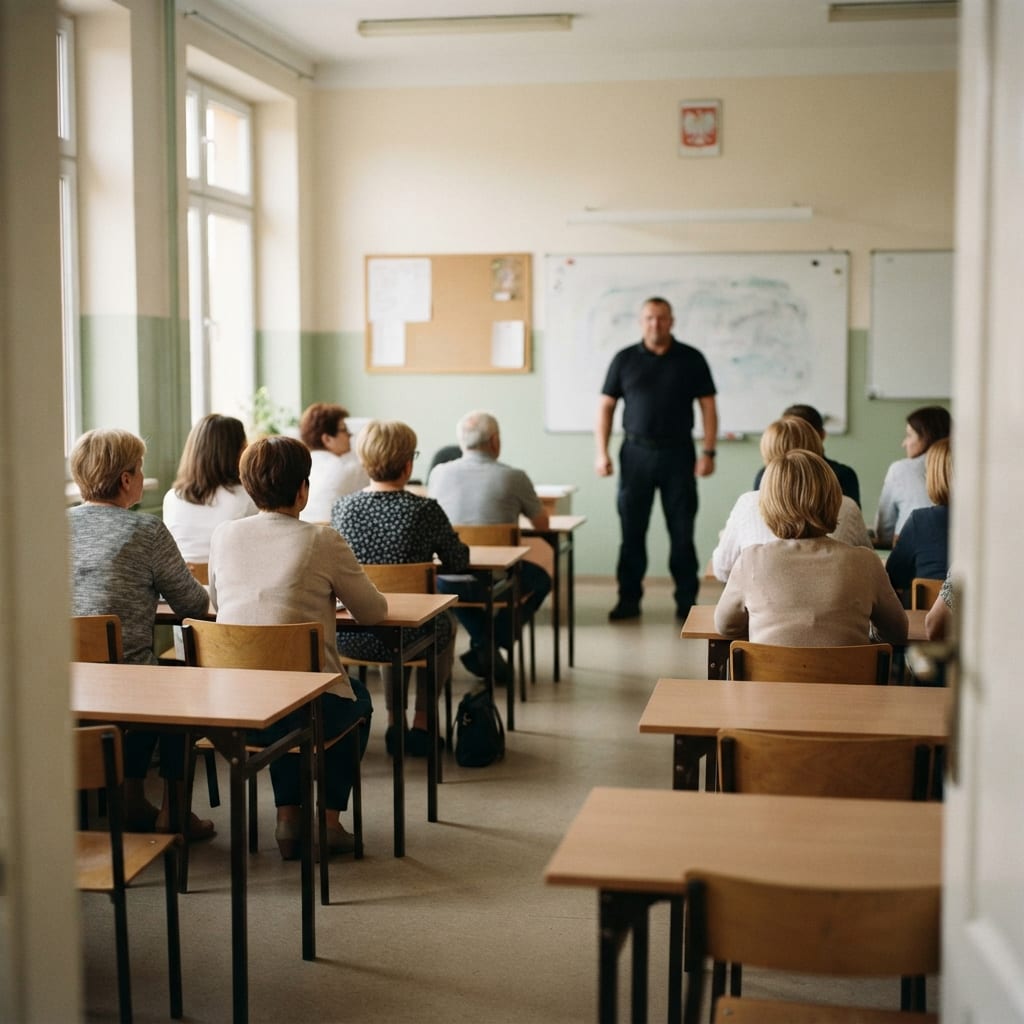
One program that prepares adults to lead a group responsibly and students to recognize threats and behave safely. The programme is aligned with guidance from Poland's Ministry of National Education and Centre for Education Development published in October 2026.
Two training days · At your school
DAY 1
Assessing the situation, making decisions under pressure, leading a group and working with emergency services.
DAY 2
Recognizing and reporting threats, following instructions and behaving safely.
STAFF AND EMPLOYEES
How to respond to a threat involving a firearm, knife or other dangerous object. Priorities are moving away, creating distance and finding cover.
Choosing a safe route, responding when leaving is not possible, accounting for people and passing on information.
STUDENTS AGED 11–18
Maintaining distance, recognizing escalation, looking for a way to move away and using protective barriers.
When to leave a threatened area, how to move with a group, follow a teacher's instructions and respond when there is no safe way out.
STAFF AND EMPLOYEES
Characteristics of the threats and their possible consequences. Distinguishing between seeing a drone and a genuine warning sign.
Official alerts and reliable information sources. Choosing between cover, remaining in a safer place and evacuation. Never approaching debris or unknown objects.
STUDENTS AGED 11–18
Distinguishing between seeing a drone and a genuine warning sign. Responding to official alerts and information from reliable sources.
Finding cover, remaining in a safer place or evacuating as instructed. Never approaching debris or unknown objects.
Recognizing signs that require a response and reporting them to the right people. Without approaching or recording the incident or sharing unverified information.
Rapidly assessing the situation, setting priorities in the first minutes and communicating in ways that reduce chaos.
Staff practice leading a group and giving clear instructions. Students learn not to return for belongings or attempt rescue actions independently in a danger zone.
Staff learn to recognize severe bleeding, the basics of bleeding control and how to call for help safely.
The essential information to give adults and emergency services, and how to cooperate after responders arrive.
Controlled scenarios adapted to participants' age and role. Reviewing decisions, common mistakes and communication, and reinforcing safety principles.
At the school, on a date agreed with the school.
Only the school's staff, employees and students — without parents or external participants.
A room for the lecture, space for agreed exercises, group organization and access to the school's current safety procedures.
A summary with recommendations for management and named digital certificates for staff — PDFs with a QR code and online verification.
Let's discuss the school's needs, participants and how to organise the sessions.

Lead Instructor
More than 20 years of tactical and teaching experience. He has trained more than 500 people from over 10 countries, including GROM operators and officers of Polish Police Counter-Terrorism units.
In the school program, he is responsible for threat recognition, decisions under pressure, evacuation, responding to aggression and protecting life.
Specialist Instructor
A former Polish Armed Forces soldier who served in the Armed Forces of Ukraine as a reconnaissance and strike drone operator, gaining frontline experience in the Donbas.
In the school program, he is responsible for recognizing drone threats, responding to alarms, finding cover and behaving safely after an explosion or around unknown objects.
Tell us who you want to train and what your school needs. Together, we will agree the scope, date and organization of the sessions.